The life's work of
Carlo Wahlbeck
The American Southwest
The Huichol Years
Medium & Method
Notable Patrons
Exhibition History
Early Life & Training
Wahlbeck began his studies at the Stockholm School of Fine Art, where Michelangelo stood as his earliest inspiration and the Italian master Baldini became his most important teaching guide. He left Europe for North America in 1957, continuing his training at the Winnipeg School of Art before eventually settling in Southern California.
The American Southwest
In the years that followed, Wahlbeck traveled widely through the Southwestern United States, searching — as so many had before him — for a new source of inspiration and a new spiritual way. He lived among the Navajo and Zuni, producing a body of surreal work that embodied their legends and outlook.
EThe Huichol Years
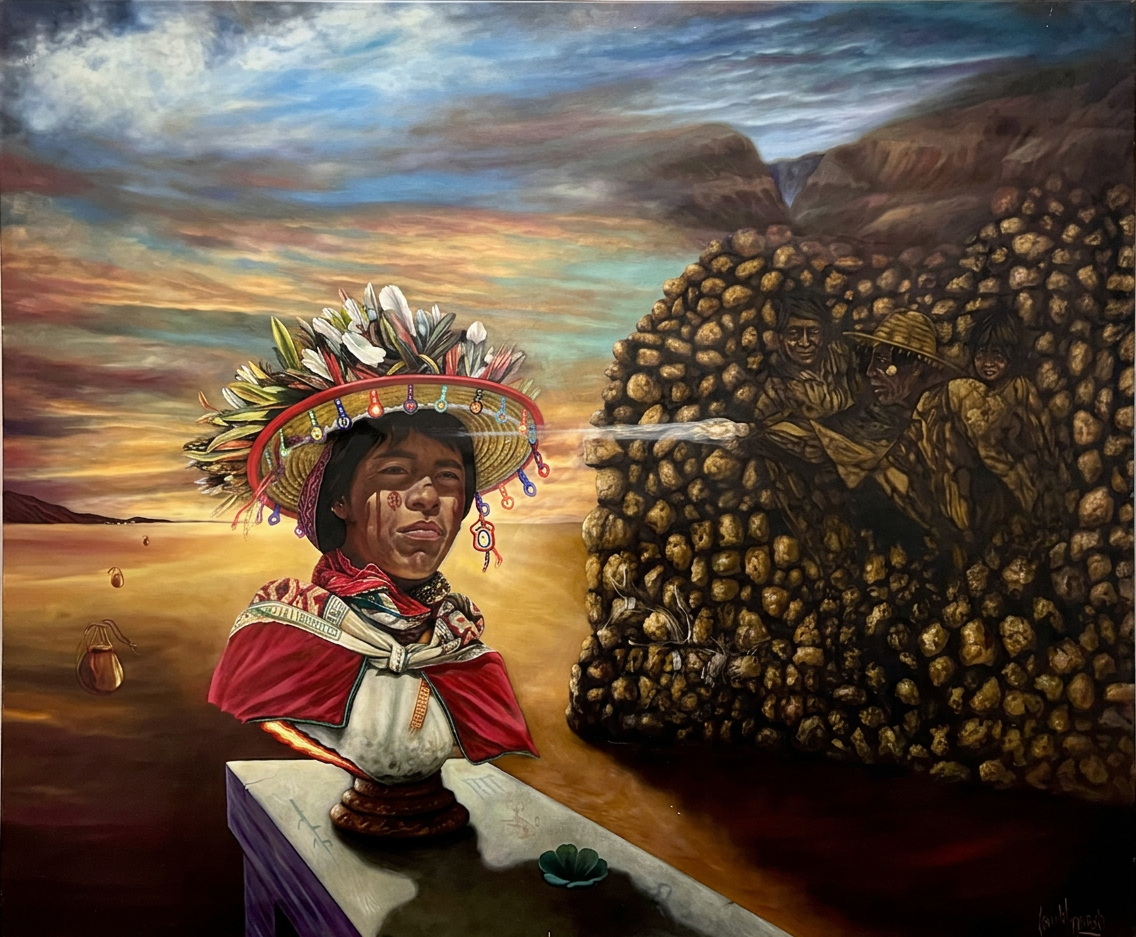
For two years, Wahlbeck lived among the Huichol people in the inaccessible mountains north of Tepic, Mexico. The paintings that emerged from this period tell the stories of the Peyote god, of Noah's Ark, and of the Indian and white man's religions as seen through Huichol eyes — alongside a series of string paintings that reveal the texture of Huichol culture and daily life.
"His works provide a fascinating insight into two worlds — the contrast is very touching to the perceptive onlooker."
Medium & Method
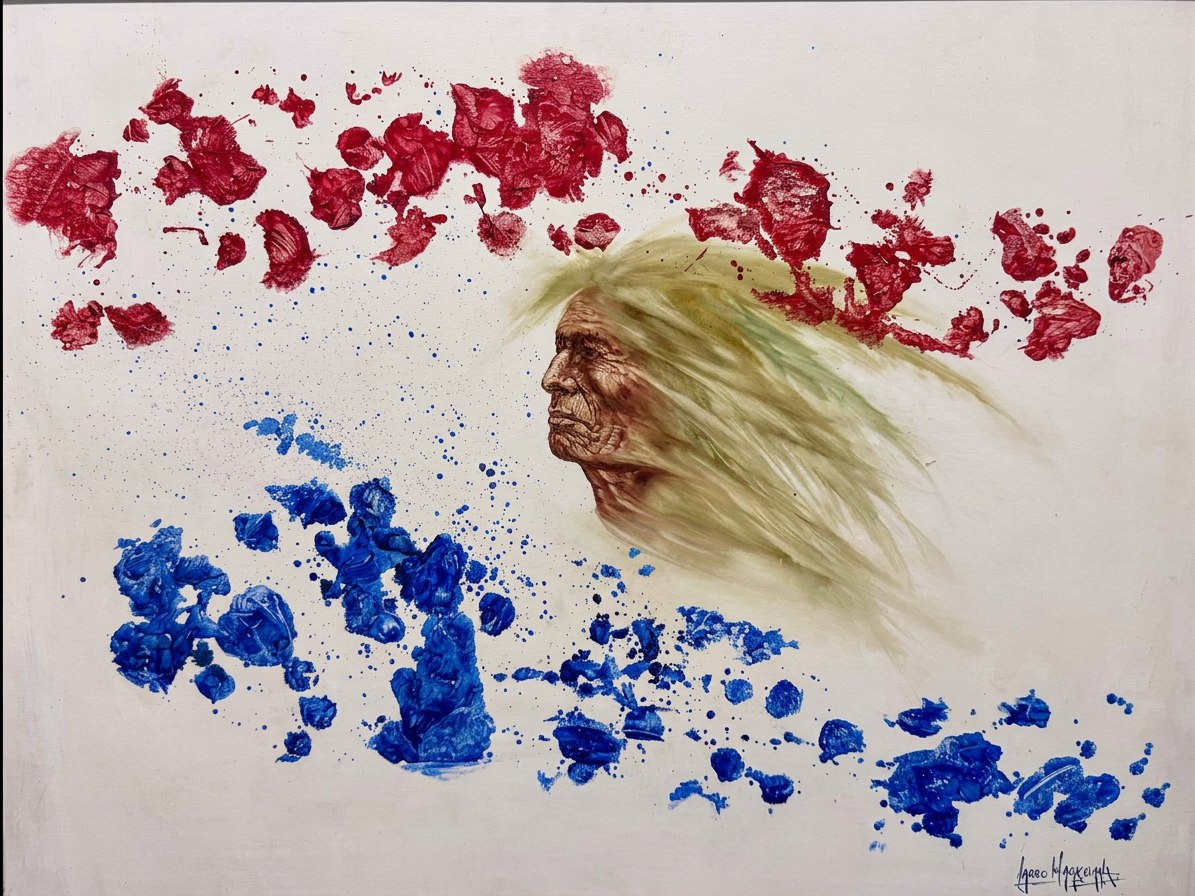
Across six decades, Wahlbeck worked fluidly between oil painting, sculptural relief, mixed media, papier-mâché, and print — an experimentalist's range that mirrored the breadth of the cultures and landscapes he moved through.
Notable Patrons
Exhibition History
Major one-man shows across the U.S. and Europe are currently being researched and archived. This section will be populated as exhibition records are confirmed.
Over 200 works, being catalogued for their first public offering
Acquiring a work
Share your name, credentials, and area of interest using the form below. We respond within 48 hours.
We arrange a private viewing, or provide detailed photography and condition reports for pieces of interest.
Qualified inquiries are matched to appropriate works, with provenance and documentation provided at transfer.